
|
Summer school on deformation in robotics
29 Jun-3 Jul 2026 Villeneuve-d'Ascq, France (France)
|
|
|
|
Program > Day 5 - Applications of Deformations in RoboticsDay 5 - Applications of Deformation in Robotics
10:00-11:00: Continuum robots for manipulation at small scale - Guillaume LaurentAbstract: Microrobotics aims to develop small-size robots and precision robots able to handle micro and nano objects. Continuum robotics opens new ways to design such robots and raises new challenges. This presentation will tackle two questions: 1) what are the interests of making continuum robots at small scale? 2) due to their deformable nature, are continuum robots able to reach sufficient precision for handling micro-objects?  Bio: Guillaume J. Laurent received his Ph.D. in control systems and computer sciences from the University of Franche-Comté in France, in 2002. He is currently associate professor at the National School of Mechanics and Microtechnologies (ENSMM) in Besançon. He is member of the Automatic Control and Micro-Mechatronic Systems Department of FEMTO-ST Institute, CNRS. His research interests include microrobotics, computer vision, parallel and continuum robots (https://gjlaurent.github.io/).
11:30-12:30: Keynote "Medical Applications: The Important Role of Continuum Robotics" - M. Taha ChikhaouiAbstract: Medical applications benefit from standard rigid-link robotics since the early 90's. Such robots offer repeatability, accuracy, and opened the scope for new clinical practices and operations. Rigid-link robots started with adaptation and integration of industrial counterparts - matured by several decades of developments - before a larger spread via dedicated systems. Continuum robots under development for medical applications are younger and specifically developed for given procedures with ever-growing technology. They drastically reduce the invasiveness, allow for novel diagnosis and therapy, and reach confined anatomy. This presentation focuses on major developments in the field, highlights some cutting-edge systems under research, and summarizes key challenges facing continuum robotics community. 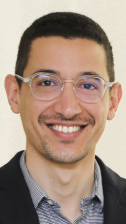 Bio: M. T. Chikhaoui received his Ph.D. in Automatic Control from the University of Franche-Comté in 2016. His research was performed at FEMTO-ST Institute in Besançon, France, where he was affiliated with the Automatic Control and Micro-Mechatronic Systems (AS2M) Department. He is recipient of the Prix de Thèse 2016. He was a postdoctoral researcher at the Laboratory for Continuum Robotics, Leibniz Universität Hannover in Hanover, Germany between 2017 and 2018. Since 2019, he is a research scientist at CNRS (The French National Centre for Scientific Research), appointed to TIMC Laboratory in Grenoble, France with the Computer-Assisted Medical Interventions (CAMI) team. He serves in multiple editorial boards including IEEE Robotics and Automation Letters. The main focus of his research is continuum robotics for medical applications. His interests are based on an interdisciplinary approach including robotic design, modeling, innovative mechatronics, and control strategies based on perception, among others.
|