|
Summer school on deformation in robotics
29 Jun-3 Jul 2026 Villeneuve-d'Ascq, France (France)
|
|
|
|
Program > Day 2 - ModelingDay 2 - Modeling09:00-10:30: Lecture "The Cosserat Beam Model: Fundamentals and Applications." - Frédéric BoyerAbstract: In recent years, the Cosserat beam model has gradually established itself as a standard in many fields, particularly in soft and continuous robotics. In this presentation, we will introduce the fundamentals of this model and provide some examples of its application in robotics. Starting with the definition of a Cosserat medium, we will show how a closed-form formulation of this model can be naturally derived and how this formulation can be solved numerically. Building on the geometrically exact finite element method, which we will briefly introduce, we will present the solution methods developed in recent years by robotics researchers. These methods will be illustrated through several applications in robotics.  Bio: Frédéric Boyer was born in France in 1967. He received the Diploma in mechanical engineering from the Institut Nationale Polytechnique de Grenoble, Grenoble, France, in 1991, the Master of Research degree in mechanics from the University of Grenoble in 1991, and the Ph.D. degree in robotics from the University of Paris VI, Paris, France, in 1994. He is currently a Professor with the Department of Automatic Control, IMTAtlantique, Nantes, France, where he is a member of the Robotics Team, Laboratoire des Sciences du Numerique de Nantes (LS2N). His current research interests include ´ structural dynamics, geometric mechanics, and biorobotics (locomotion dynamics and underwater electric sensing). Dr. Boyer received the Monpetit Prize from the Academy of Science of Paris in 2007 for his work in dynamics and the French ”La Recherche Prize” in 2014, for his works on artificial electric sense. He has coordinated several national projects and one European FP7-FET project on a reconfigurable eel-like robot able to navigate with electric sense. 11:00-11:30: Lecture "Continuum Mechanics for the Modeling of Elastic Bodies and Numerical Resolution" - Christian DuriezAbstract: This class will aim at giving the basics of the mechanics of deformable solids (continuum mechanics). I will then explain how numerical models can be used to solve these equations, in particular finite element models. Finally, we will see how we can apply these models in a deformable robotics context, in particular for real-time execution. 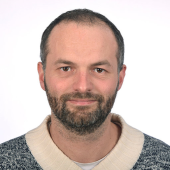 Bio: I received an engineering degree from the Institut Catholique d’Arts et Métiers of Lille, France and a PhD degree in robotics from University of Evry, France. My thesis work was realized at CEA/Robotics and Interactive Systems Technologies followed by a postdoctoral position at the CIMIT SimGroup in Boston. I arrived at INRIA in 2006 in the ALCOVE team to work on interactive simulations of deformable objects and haptic rendering. In 2009, I was the vice-head of SHACRA team and focus on medical simulation. I am now the head of DEFROST team, created in January 2015 . My research topics are Soft Robot models and control, Fast Finite Element Methods, simulation of contact response and other complex mechanical interactions, new algorithms for haptics… All my research results are developed in SOFA, which is a framework that we co-develop with other INRIA teams. I was also one of the founders of the start-up company InSimo which use our research results for a fantastic humanitarian project
13:30-14:30: Keynote to be decided |