
|
Summer school on deformation in robotics
29 Jun-3 Jul 2026 Villeneuve-d'Ascq, France (France)
|
|
|
|
Program > Day 3 - Design and Manufacturing09:00-10:00: Keynote to be decided - Hemma Philamore (confirmed)10:00-11:00: Lecture "Design and manufacturing of compliant mechanisms: an old story, yet an evolving field with impact on robot design" - Pierre RenaudAbstract: The use of material compliance—and, ultimately, the exploitation of deformation that designers usually seek to avoid—has been widely considered in the design of flexible joints and mechanisms of possible use in robotics. In this session, examples will be highlighted to illustrate the benefits of using compliance and the specific challenges that arise as a result. Building on these examples, elements concerning design methods and implementation techniques will be introduced to provide guidance for the design and fabrication of compliant systems. Finally, the possibility of using these tools and methods to design systems capable of large displacements and deformations will be introduced and discussed through examples.
 Bio: Pierre Renaud is full professor at INSA Strasbourg, France. He received the M.Sc. degree in mechanics and materials from the Ecole Normale Supérieure de Cachan, France, in 2000 and the Ph.D. degree in robotics from the Clermont-Ferrand University , France in 2003. Former Fulbright fellow and visiting associate professor at Stanford University in 2010, he is professor since 2013. He is Deputy Director of the ICube research lab in Strasbourg, a major driving force for research in Strasbourg with 750 members in the fields of engineering science, computer science, and imaging. He was previously head of RDH research group, specialized in robotics and mechatronics. His research activity concerns mechatronics for medical robotics, with particular interest in design for additive manufacturing, compliant mechanisms, and tensegrity mechanisms. Author of over 130 publications in journals and international conferences, former IEEE T-RO associate editor, he is also a co-founder of Axilum Robotics, a spin-off dedicated to the development of robotized image-guided brain procedures. 11:30-12:30: Keynote "Design, sensing and control for more interactive soft medical robots" - Lukas LindenrothAbstract: Soft robotics is attracting growing interest across various disciplines in medicine. Unlike rigid systems, soft robots can be fabricated from compliant materials that naturally conform to human tissue, yet this inherent flexibility introduces significant challenges in defining reliable task-space control. In this talk, I will explore the different stages of soft medical robot development, from defining clinical requirements, through state-of-the-art fabrication techniques that enable tailored mechanical behaviour, to intrinsic sensing strategies that allow soft robots to perceive and respond to dynamic changes in the environment. I will then examine control methodologies that make soft robots deployable and reconfigurable for practical use in clinical settings, and discuss open challenges for the field.
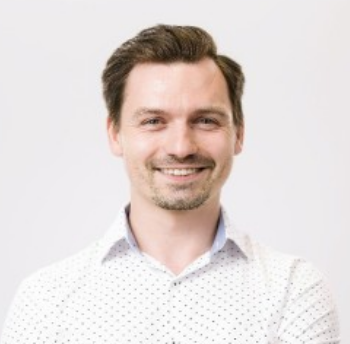 Bio: Dr Lukas Lindenroth is a Senior Lecturer in Medical Devices & Robotics in the Department of Surgical and Interventional Engineering within the School of Biomedical Engineering and Imaging Sciences at King's College London. His research focuses on using novel robotics technologies such as soft robotics to develop medical devices for improved patient outcomes and clinician experience. Prior to this role he was postdoctoral research fellow at the Wellcome / EPSRC Centre for Interventional and Surgical Sciences at University College London. He obtained his PhD in Robotics from KCL where he developed soft robotic solutions for diagnostic ultrasound. His works have been recognised with the Innovation Prize at the Hamlyn Surgical Robot Challenge and the Mechatronics Engineering Student of the Year Award of the Institution of Mechanical Engineers (IMechE).
13:30-14:30: Keynote "Crafting behaviour. Designing with inherent material and structural mechanisms in textiles" - Ana PiñeyroAbstract:Materials are inherently active; they have intrinsic capacities for the generation of form and structure. Open to forces and energy flows in their environment, they respond and adapt, remaining in continual flux and variation. What opportunities arise for design when the complex and variable behaviour of materials is emphasised? In this session, I discuss a textile design approach to the generation of responsive, shape-changing structures using conventional materials such as polymer filaments, paper, and wool. Framing making as a “morphogenetic process” (Ingold, 2013), and drawing on the structural hierarchy of textiles to explore material tendencies and capacities, I present examples from my practice that show how difference and variation can operate as generative mechanisms, through which I identify material and structural principles and environmental conditions that underpin expressive behaviour.  Bio: Ana Piñeyro is a textile and materials designer and researcher, specialised in active soft technologies. She holds a Ph.D. in Textiles from the Royal College of Art (London), an M.Sc. in Cognitive Systems and Interactive Media from Pompeu Fabra University (Barcelona), and has conducted post-doctoral research at EnsadLab, École des Arts Décoratifs - Université PSL (Paris). With experience spanning industry and academia, she has worked on R&D of smart textiles and advanced functional materials at CETEMMSA Technology Centre (now EURECAT, Barcelona), colour and material innovation for automotive interiors at Johnson Controls GmbH, Automotive Experience (now Adient, Burscheid, Germany), and colour and emotion research for mixed-reality interactions at Pompeu Fabra University (Barcelona). Her practice-based research brings together textile design, material experimentation, and critical making to explore responsive behaviours and emergent forms of expression. Drawing on neo-materialist perspectives and craft-based methods, her practice reveals materials’ latent capacities, expanding their aesthetic and functional possibilities. Through these engagements, her work investigates the role of intuitive making in the generation of knowledge, embracing mistakes and the accidental as catalysts of creative opportunities.
|