
|
Summer school on deformation in robotics
29 Jun-3 Jul 2026 Villeneuve-d'Ascq, France (France)
|
|
|
|
Program > Day 4 - Control and PerceptionDay 4 - Control and Perception9:00-10:00: Lecture "Workspace Analysis" - Quentin PeyronAbstract: In this lecture, we will talk about the notion of workspace, which is essential to understand when controlling robots. The workspace is the set of end-effector positions or poses (including orientation) that can be reached. I will give an overview of the numerical methods that can be used to compute the workspace, and present their results for different soft robot architectures. An important part of this lecture will also concern the presence of singular and elastically unstable robot configurations, for which the robot loses degrees of freedom or exhibit sudden snapping behaviors. I will give an overview of known singularities and buckling phenomena in soft robotics, and how to predict and manage them. 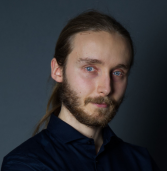 Bio: Dr. Quentin Peyron is a research scientist at the INRIA institute, working with the DEFROST team. After obtaining an engineering diploma in mechatronics from INSA Strasbourg, and a master in robotics from the University of Strasbourg, he obtained a PhD in robotics from the University of Bourgogne Franche Comté. During his PhD, he worked in co-supervision with the ICube (Strasbourg) and FEMTO-ST (Besançon) laboratories on the modeling, analysis and design of slender and thin continuum robots for minimally invasive surgery. He also collaborated with the MSRL team of ETH Zürich on magnetic continuum robots. He was a Postdoctoral Fellow at the Continuum Robotics Lab of the University of Toronto from 2020 to 2021, where he worked on tendon-driven continuum robots. During his Post-Doc, he received the Post-Doctoral Fellowship Award from the University of Toronto. His research interests are the modeling, design, and control of continuum and soft robots, and the development of eco-designed soft robotics for industrial applications.
10:00-11:00: Lecture "Simple controllers for complex dynamics: from soft robots to deformable objects" - Cosimo Della SantinaAbstract: When controlling systems with complex, high-dimensional dynamics, the tempataion to is increase model complexity, controller sophistication, or (possibly) data scale. This talk argues that an alternative path is possible: rather than making controllers more complex, we can design representations that render the underlying dynamics more intelligible, enabling simple control laws (PID+, CLIK, etc) to achieve robust performance even in strongly nonlinear and underactuated regimes. This perspective is motivated and illustrated through examples ranging from soft continuum robots to the manipulation of deformable objects such as cables and flexible assemblies. 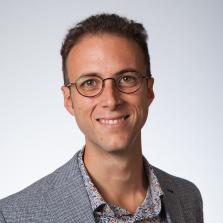 Bio: Cosimo Della Santina received the Ph.D. degree (cum laude) in Robotics from the University of Pisa in 2019. He is currently an Associate Professor at TU Delft (The Netherlands) and a Guest Research Scientist at the German Aerospace Center (DLR) in Munich. From 2017 to 2019, he was a Visiting Ph.D. student and Postdoctoral Fellow at the Computer Science and Artificial Intelligence Laboratory (CSAIL), Massachusetts Institute of Technology. Between 2020 and 2021, he served as a Senior Postdoctoral Researcher and Guest Lecturer at the Technical University of Munich. His research focuses on endowing unconventional robotic systems, especially those with elastic and soft components, with motor intelligence grounded in physics-based modeling and control theory. Dr. Della Santina co-directs the Delft AI Lab SELF and is a recipient of the NWO Veni Fellowship. His work has been recognized with the 2020 Georges Giralt Ph.D. Award, the 2023 IEEE RAS Early Career Award, and an ERC Starting Grant in 2024. In 2025, he co-founded the Swiss start-up Embodied AI, which develops safe and capable robots designed to operate in human environments.
11:30-12:30: Keynote to be decided
13:30-14h30: Lecture "Model-Based Sensing and Design Optimization for Soft Robotics" - Stefan Escaida NavarroAbstract: In this lecture, I will report on the work on model-based sensing for soft robots. Model-based sensing addresses the challenge of enabling tactile sensing and proprioception for soft robots in a principled way. Using inverse problem solving, the forces/deformations that best explain the observed sensor readings can be found. The first results were obtained with soft pads, which are passive devices. Air chambers are embedded in these devices and changes in volume or pressure are measured by pneumatic sensors. Forces magnitudes and deformations could be estimated using SOFA. However, for estimating contact location, machine learning had to be employed. Therefore, as a follow-up, a multi-modal sensing approach was proposed: contact location is obtained using soft capacitive touchpads and thus interactions can completely be handled by the numerical simulation. In recent works, it was studied how these approaches can be applied to actuated devices. We have found that these results can be applied to the development of anatomical soft robots, that is, novel medical phantoms having advanced functionality as well as multi-segment soft manipulators. Finally, I will talk about design optimization of soft robots with embedded sensors using SOFA and the challenges related to sim-to-real transfer. 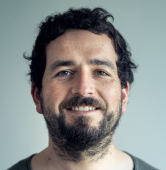 Bio: Stefan is an Assistant Professor at Universidad de O'Higgins. He received his diploma in computer science (Dipl.-Informatiker) from Karlsruhe Institute of Technology (KIT), Germany in 2010. He obtained his PhD degree (Dr.-Ing.) from the same institution in 2016. He is passionate about tactile and proximity perception in robotics, with interests ranging from sensor design to the applications enabled by them. During his doctoral phase he researched on haptic object recognition and grasping as well as the technology and the applications for capacitive tactile proximity sensors, such as preshaping, collision avoidance and teleoperation. After his PhD, he was postdoctoral researcher at Inria Lille, where worked on model-based force and shape sensing for Soft Robotics. Since October 2022 he's an Assistant Professor at Universidad de O'Higgins, where he continues his research on sensing for Robotics, with a focus on Soft Robotics for medical applications, smart agriculture and visual arts.
|