
|
Summer school on deformation in robotics
29 Jun-3 Jul 2026 Villeneuve-d'Ascq, France (France)
|
|
|
|
Program > Confirmed speakersKanty Rabenorosoa Bio: Kanty Rabenorosoa received an M.S. degree in electrical engineering from the Institut National des Sciences Appliquées Strasbourg, Strasbourg, France, in 2007, and the Ph.D. degree in automatic control from the University of Franche-Comté, Besançon, France, in 2010. From 2011 to 2012, he was a Postdoctoral Fellow with Laboratoire d’Informatique, de Robotique et de Micro-électronique de Montpellier, University of Montpellier, Montpellier, France. He was an Associate Professor at ENSMM-SUPMICROTECH from 2012 to 2023. He is currently a full Professor (section 61) at University of Franche-Comté with the Automatic Control and Micro-Mechatronic Systems (AS2M) department of FEMTO-ST Institute. His research interests include mechatronics, smart actuator, origami-based robots, soft and continuum microrobotics for medical applications.
Olivia Chevalier Bio: Olivia Chevalier est chargée de recherche en philosophie des sciences (Institut Mines-Telecom/Chaire Innovation Bloc Opératoire Augmenté et PEPR O2R). Ses recherches ont d’abord été consacrées à la rationalité́ scientifique à l’âge classique (chez Descartes, Leibniz) et sa pertinence contemporaine. Elles se prolongent aujourd’hui dans une réflexion sur les implications épistémologiques des nouvelles technologies en chirurgie (Chaire Innovation Bloc Opératoire Augmenté) et en robotique organique. Dernier ouvrage : Descartes et ses mathématiques, Garnier Classique, 2022.
Frédéric Boyer Bio: Frédéric Boyer was born in France in 1967. He received the Diploma in mechanical engineering from the Institut Nationale Polytechnique de Grenoble, Grenoble, France, in 1991, the Master of Research degree in mechanics from the University of Grenoble in 1991, and the Ph.D. degree in robotics from the University of Paris VI, Paris, France, in 1994. He is currently a Professor with the Department of Automatic Control, IMTAtlantique, Nantes, France, where he is a member of the Robotics Team, Laboratoire des Sciences du Numerique de Nantes (LS2N). His current research interests include ´ structural dynamics, geometric mechanics, and biorobotics (locomotion dynamics and underwater electric sensing). Dr. Boyer received the Monpetit Prize from the Academy of Science of Paris in 2007 for his work in dynamics and the French ”La Recherche Prize” in 2014, for his works on artificial electric sense. He has coordinated several national projects and one European FP7-FET project on a reconfigurable eel-like robot able to navigate with electric sense. Christian Duriez Bio: C. Duriez received an engineering degree from the Institut Catholique d’Arts et Métiers of Lille, France and a PhD degree in robotics from University of Evry, France. My thesis work was realized at CEA/Robotics and Interactive Systems Technologies followed by a postdoctoral position at the CIMIT SimGroup in Boston. I arrived at INRIA in 2006 in the ALCOVE team to work on interactive simulations of deformable objects and haptic rendering. In 2009, I was the vice-head of SHACRA team and focus on medical simulation. I am now the head of DEFROST team, created in January 2015 . My research topics are Soft Robot models and control, Fast Finite Element Methods, simulation of contact response and other complex mechanical interactions, new algorithms for haptics… All my research results are developed in SOFA, which is a framework that we co-develop with other INRIA teams. I was also one of the founders of the start-up company InSimo which use our research results for a fantastic humanitarian project
Stefan Escaida Navarro Bio: Stefan is an Assistant Professor at Universidad de O'Higgins. He received his diploma in computer science (Dipl.-Informatiker) from Karlsruhe Institute of Technology (KIT), Germany in 2010. He obtained his PhD degree (Dr.-Ing.) from the same institution in 2016. He is passionate about tactile and proximity perception in robotics, with interests ranging from sensor design to the applications enabled by them. During his doctoral phase he researched on haptic object recognition and grasping as well as the technology and the applications for capacitive tactile proximity sensors, such as preshaping, collision avoidance and teleoperation. After his PhD, he was postdoctoral researcher at Inria Lille, where worked on model-based force and shape sensing for Soft Robotics. Since October 2022 he's an Assistant Professor at Universidad de O'Higgins, where he continues his research on sensing for Robotics, with a focus on Soft Robotics for medical applications, smart agriculture and visual arts.
Quentin Peyron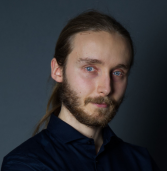 Bio: Dr. Quentin Peyron is a research scientist at the INRIA institute, working with the DEFROST team. After obtaining an engineering diploma in mechatronics from INSA Strasbourg, and a master in robotics from the University of Strasbourg, he obtained a PhD in robotics from the University of Bourgogne Franche Comté. During his PhD, he worked in co-supervision with the ICube (Strasbourg) and FEMTO-ST (Besançon) laboratories on the modeling, analysis and design of slender and thin continuum robots for minimally invasive surgery. He also collaborated with the MSRL team of ETH Zürich on magnetic continuum robots. He was a Postdoctoral Fellow at the Continuum Robotics Lab of the University of Toronto from 2020 to 2021, where he worked on tendon-driven continuum robots. During his Post-Doc, he received the Post-Doctoral Fellowship Award from the University of Toronto. His research interests are the modeling, design, and control of continuum and soft robots, and the development of eco-designed soft robotics for industrial applications. Cosimo Della Santina
Taha Chikhaoui
|